Showcasing district efforts to improve indoor air quality and energy efficiency for students and staff
Now in its 31st year, NSBA’s Magna Awards recognition program continues to honor school district innovation. This year, three Grand Prize-winning districts and two Silver Award-winning districts are celebrated for their efforts to enhance student learning and academic success by improving indoor air quality (IAQ) and reducing greenhouse gas (GHG) emissions. The 2026 program's IAQ focus is the result of a grant partnership with the nonprofit Go Green Initiative.
March 23, 2026
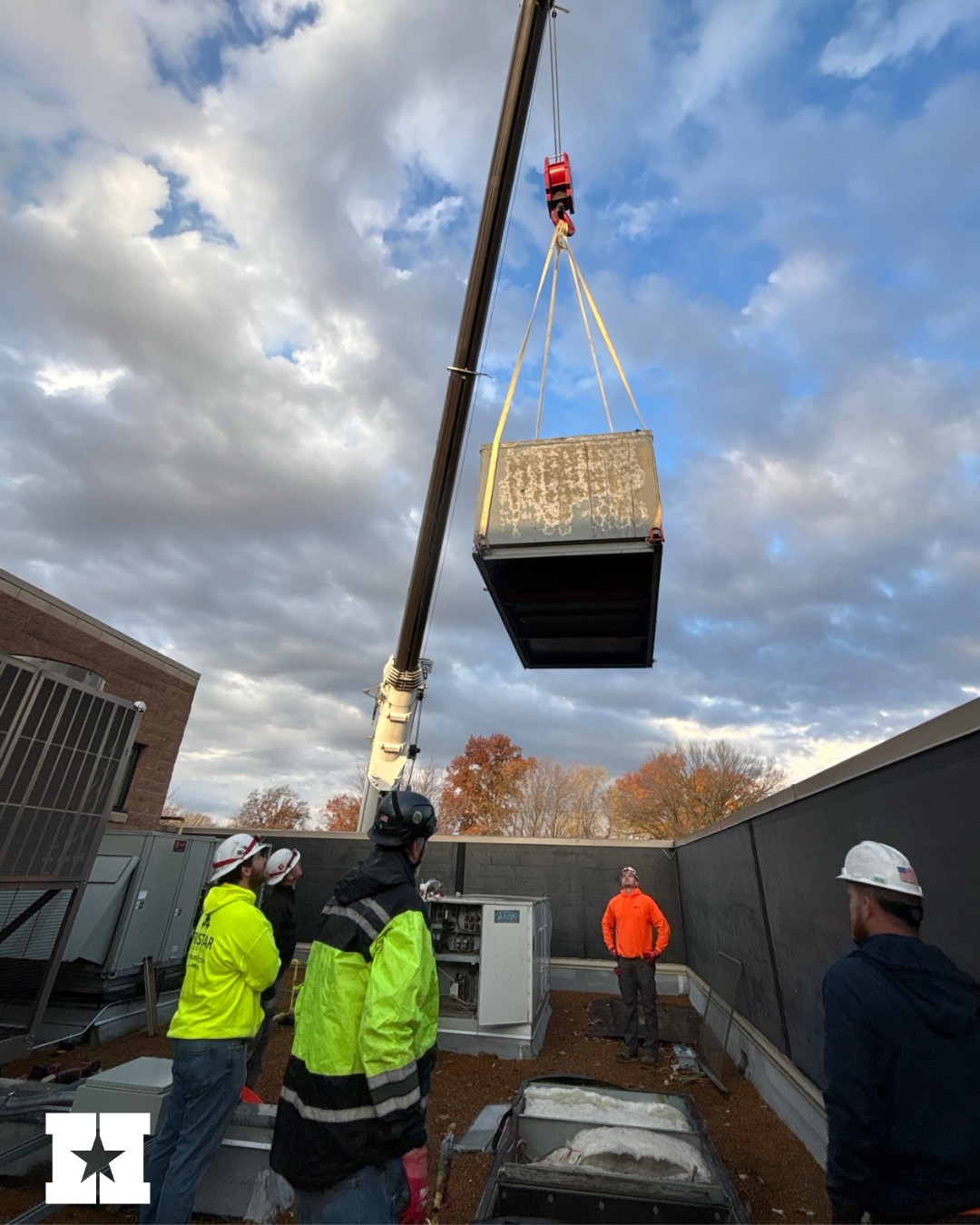 WORKERS WATCH A CRANE POSITION A NEW, UPGRADED ROOFTOP HVAC SYSTEM. THE EQUIPMENT IS PART OF EAST ST. LOUIS SCHOOL DISTRICT 189'S PROGRESS TOWARD CREATING A HEALTHIER, MORE COMFORTABLE LEARNING ENVIRONMENT FOR ALL STUDENTS AND STAFF AND UNDERSCORES THE LINK BETWEEN ENVIRONMENTAL QUALITY, EQUITY, AND COMMUNITY CONFIDENCE.
PHOTO COURTESY OF EAST ST. LOUIS SCHOOL DISTRICT 189 AND HOLLAND CONSTRUCTION SERVICES
NSBA’s Magna Awards have been honoring innovative school district programs for more than 30 years. This year, we are recognizing school district efforts enhancing student learning and academic success by improving their indoor air quality (IAQ) and reducing greenhouse gas (GHG) emissions.
The new focus is the result of a grant partnership with the nonprofit organization, Go Green Initiative (GGI). The organization helps school districts with two important objectives: protect student health from environmental health risks at school and conserve natural resources for future generations.
In 2024, GGI received a five-year, $8 million grant from the U.S. Environmental Protection Agency to improve indoor air quality and energy efficiency in schools. It formed a partnership with NSBA to bring funding, training, and technical support to as many school districts as possible.
To be eligible for the awards, school districts must enact a new IAQ Management Plan and document reductions in GHG emissions. Throughout the year, school districts had the opportunity to earn points toward the awards by attending in-person and online training.
Districts were encouraged to have representatives of the following groups receive training: school board members, assistant superintendent of teaching and learning, school business officer, facilities manager, health officer, head custodian, and parent leader.
In early December, a panel of judges met to select the winning districts. The panel, made up of members of the NSBA board of directors awards committee and senior staff from GGI, looked for applicants who:
Submitted an IAQ Plan that is written in accordance with EPA guidance for a Model IAQ Plan.
Earned points in a variety of ways; for example, in-person and online training, documentation, and webinar attendance.
Were supported by district leaders.
The judges chose three Grand Prize winners, one for each enrollment category: under 5,000, 5,000 to 20,000, and over 20,000. They also recognized two Silver Award winners, one of each in the under 5,000 and over 20,000 enrollment categories.
NSBA and GGI will honor the winning school districts during an awards breakfast at NSBA’s 2026 Annual Conference in San Antonio, April 10-12. Grand Prize-winning school districts will present their programs during a special Magna Awards education session during the conference.
We hope to see you in San Antonio.
Out with the Old, In with the Efficient
East St. Louis School District 189
East St. Louis, Illinois
Under 5,000 enrollment
Located across the Mississippi River from St. Louis, Missouri, East St. Louis School District 189 serves multiple smaller municipalities and portions of neighboring communities within the bi-state St. Louis metropolitan region. The district’s service area has a population of nearly 38,000 residents, the majority of whom are Black (96%). Nearly 40% of resident are under age 24. In a community where more than half of families with children live below the poverty line, the schools function as essential anchors of stability, opportunity, and progress.
Across 10 campuses, 882 dedicated full-time staff serve approximately 4,600 students from preschool through 12th grade. The district operates an early childhood center, a K-8 academy, four elementary schools, two middle schools, one high school, and a secondary alternative center. These schools provide rigorous academics, enrichment opportunities, and comprehensive student supports. Every student qualifies for free or reduced-price meals, 12% receive special education services, and 5% are identified as unhoused, underscoring the essential role the schools play in meeting both educational and basic needs.
Despite longstanding economic challenges in the region, East St. Louis School District 189 remains firmly committed to excellence. Its students reflect the resilience of their community—they are vibrant, strong, and determined. This belief drives a continued focus on creating safe, healthy, and high-performing learning environments where every child can thrive.
The Board of Education has been instrumental in advancing the district’s indoor air quality (IAQ) efforts by approving and championing comprehensive, districtwide strategic plans centered on energy efficiency, environmental health, and facility modernization. This governance leadership is embedded in the district’s Carbon-Free Schools initiative and its five-year Carbon Footprint Reduction and Energy Savings Plan—a roadmap that aligns fiscal responsibility with environmental stewardship and student well-being.
Air quality is a significant concern across the region, and many students experience asthma and other respiratory challenges. Recognizing the direct connection between environmental conditions and student health, the board has prioritized investments that reduce exposure to pollutants and create healthier spaces for learning—both inside classrooms and across the broader school environment.
Through its support and authorization, the board translated vision into action.
FORMAL REPORTING AND ACCOUNTABILITY
The board approved independent environmental consultants JS Held to conduct documented IAQ assessments and provide ongoing program reports. This formalized the district’s commitment to transparency, accountability, and continuous improvement, while establishing a clear framework to monitor outcomes and measure progress.
LARGE-SCALE ENERGY EFFICIENCY AND INFRASTRUCTURE MODERNIZATION
With board authorization, the district launched a transformative energy efficiency project in partnership with Ameren Illinois and Holland Construction Services. This initiative directly improved indoor learning environments across 13 facilities through:
HVAC system retrofits: Comprehensive upgrades to heating, ventilation, and air conditioning systems to enhance air circulation, filtration, and occupant comfort.
Building envelope improvements: Enhanced insulation and window upgrades to improve thermal performance, increase energy efficiency, and maintain consistent indoor conditions.
CLEAN TRANSPORTATION INVESTMENTS
Extending its environmental health commitment beyond school buildings, the district also has added 25 electric buses to the student transportation fleet. These zero-emission vehicles reduce diesel exhaust exposure for students and neighborhoods, lower greenhouse gas emissions, and reinforce the district’s broader carbon reduction goals.
By prioritizing formal oversight, investing in major infrastructure upgrades, and leveraging strategic partnerships, the Board of Education has provided the leadership and financial stewardship necessary to create healthier, safer learning environments for students and staff.
“We are honored to receive the Magna Award and grateful to our Board of Education and Board President Timothy Lockett for their unwavering commitment to putting students first,” Superintendent Arthur R. Culver said.
He continued, “Improving indoor air quality across our schools is not simply a facilities upgrade; it is a promise to our students, families, and staff that their well-being matters. This recognition affirms our commitment to excellence in everything we do—because our students deserve nothing less. It also reflects our dedication to fostering a positive culture and climate that supports the well-being of every student we serve.”
CONTACT
Joseph Haskell
Director of Maintenance, Operations and Risk Management
joseph.haskell@estl189.com
www.estl189.com
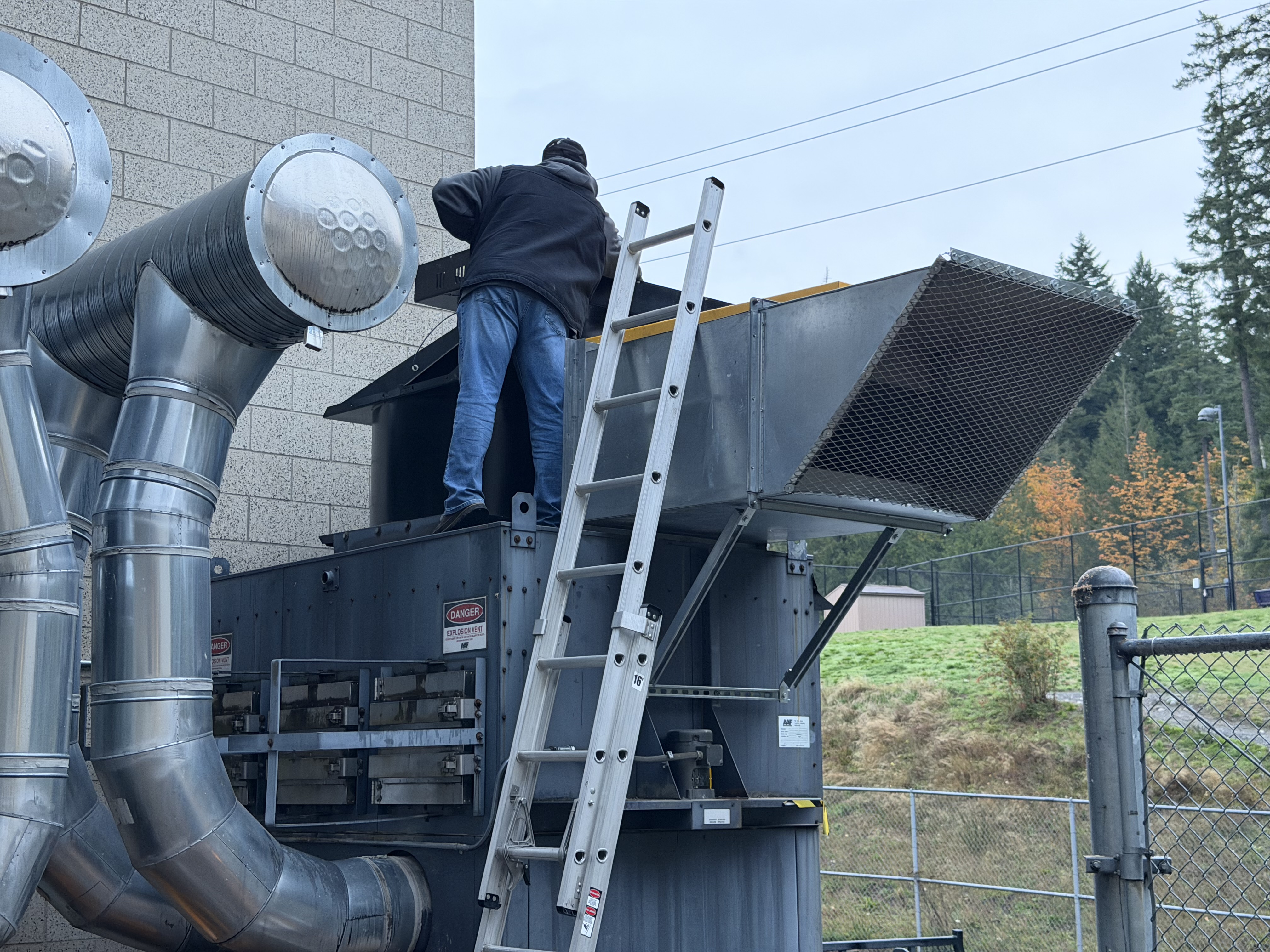 WHEN THE WOODSHOP DUST COLLECTOR AT AN ISSAQUAH HIGH SCHOOL NO LONGER FUNCTIONED EFFECTIVELY, THE DISTRICT'S INDOOR ENVIRONMENTAL
QUALITY (IEQ)COMMITTEE WORKED COLLABORATIVELY WITH SCHOOL STAFF AND THE MAINTENANCE DEPARTMENT TO INVESTIGATE. DURING THE REPAIR
PROCESS, THE COMMITTEE MAINTAINED CLOSE COMMUNICATION WITH SCHOOL STAFF AND IMPLEMENTED TEMPORARY DUST COLLECTION MEASURES TO
ALLOW CLASSES TO CONTINUE SAFELY.
PHOTO COURTESY OF ISSAQUAH SCHOOL DISTRICT 411
IAQ Focus in a Vibrant Northwest Community
Issaquah School District 411
Issaquah, Washington
5,000 to 20,000 enrollment
Issaquah School District 411’s 27 schools are positioned across 110 square miles and within seven municipalities. Located 30 miles east of Seattle in the foothills of the Cascade Mountains, the district has grown with the region as it has transformed during the past century from sleepy mining towns to the heart of a vibrant economic and cultural region. More than 18,500 students are now enrolled in the district, many of whom score within the top 5% on state and national standardized tests. In 2024-25, the district achieved a 96.3% four-year graduation rate, ranking No. 1 in King County and tying for No. 1 statewide among large districts, with gains across multiple student groups.
The district serves a generally upper middle-class community that is becoming increasingly ethnically diverse. Residents lead and work at local corporate giants such as Microsoft, Costco, Starbucks, Amazon, Google, and Boeing. The community is highly engaged as business members help shape career curricula, and voters consistently pass school finance ballot measures. District teachers are respected professionals: 90% of community members have rated them “excellent” in ongoing polling and 60% of staff hold master’s or doctorate degrees.
“Our Indoor Air Quality program reflects our commitment to safe, healthy learning and working environments in every school,” said Julius Carter, director of facility services.
Carter added, “Clean air is the result of careful planning, consistent maintenance and a daily focus on continuous improvement by skilled technicians and custodians who monitor and adjust systems in real time to prevent small issues from becoming larger concerns. It is also about staying ahead of the curve, anticipating needs, maintaining strong control systems and responding before equipment fails, all while recognizing that resources are limited.”
The Issaquah School Board supported the creation of this program primarily through its policy and governance support by adopting a formal Indoor Air Quality policy that aligns with EPA and American Society of Heating, Refrigerating and Air-Conditioning Engineers standards. The board also supports the continued success of the program by making sure funding and resources are allocated in the annual operating budgets for IAQ initiatives and training opportunities so the staff can stay up to date on current best practices.
The objectives of Issaquah’s IAQ plan are:
- Reduce the level of indoor air pollutants through preventative measures such as routine maintenance activities, periodic informal building inspections, pollutant source control and other actions.
- Provide and maintain adequate airflow by repairing and maintaining ventilation equipment, which will promote a comfortable and healthy working and learning environment.
- Respond to concerns and problems in a prompt and thorough manner and provide timely progress reports to all interested parties.
“This award recognizes the dedication of many people who advance sustainable practices across the district every day, and it affirms that our strategies are working. With strong leadership support and partnerships, including our work with Puget Sound Energy, we are capturing cost efficiencies and reinvesting those savings into classrooms to support students, where they belong,” said Carter.
CONTACT
Julius Carter
Director of Facility Services
carterj@issaquah.wednet.edu
www.isd411.org
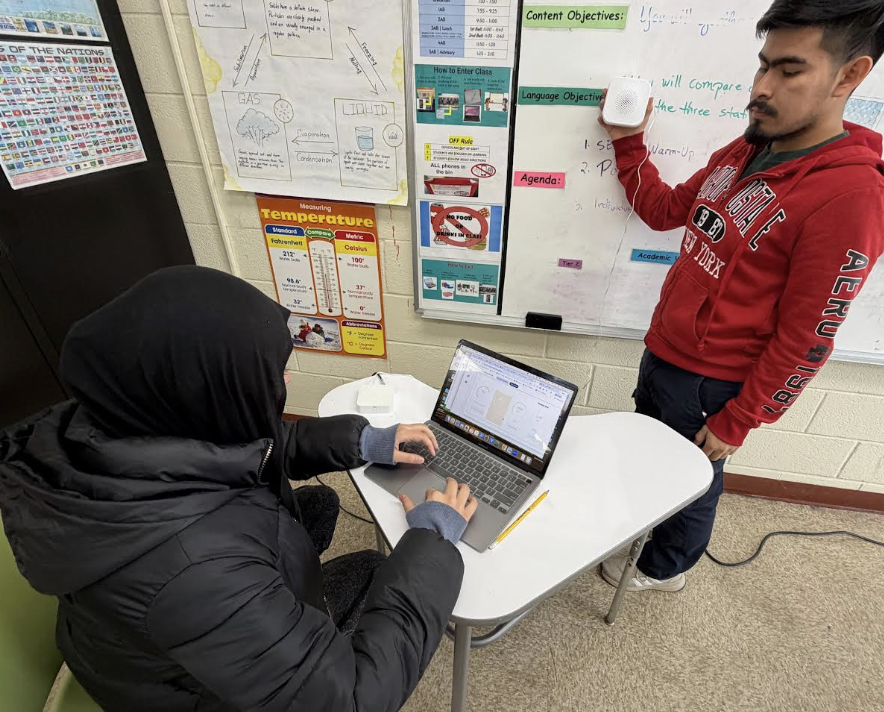 STUDENTS IN A PRINCE GEORGE'S COUNTY PUBLIC SCHOOLS (PGCPS) SCIENCE CLASS USE INDOOR AIR QUALITY (IAQ) MONITORING DEVICES TO COLLECT
AND ANALYZE REAL-TIME DATA IN THEIR CLASSROOM. RECOGNIZING THAT INDOOR AIR QUALITY (IAQ) IMPACTS HOW STUDENTS FEEL, FOCUS, AND LEARN,
PGCPS RAISES AWARENESS OF IAQ AT PROFESSIONAL LEARNING EVENTS, HEALTHY SCHOOLS AND FACILITIES CONFERENCES, AND USES IT AS A CLASSROOM
LEARNING TOOL. THE FOCUS ON IAQ ALSO IS INTENDED TO EMPOWER STUDENTS AND TEACHERS TO BE AMBASSADORS FOR ENVIRONMENTAL JUSTICE.
PHOTO COURTESY OF PRINCE GEORGE’S COUNTY PUBLIC SCHOOLS
Driving School Health and Student Action
Prince George’s County Public Schools
Upper Marlboro, Maryland
Over 20,000 enrollment
Prince George’s County Public Schools (PGCPS) is a pre-K through 12th grade school system serving a diverse community in Maryland. As the 18th largest school district in the United States, and the second largest in Maryland, PGCPS educates a population of 130,603 students in over 200 schools. The student body reflects global diversity, with 193 languages spoken across the district. The student population’s racial breakdown is predominantly composed of Black (49.6%) and Hispanic/Latino (41.6%) students. This diversity is further highlighted by the fact that over 20% of students are English learners. PGCPS recognizes that factors like upbringing, social status, home language, culture, and race profoundly shape how students interpret the world. The district is committed to identifying and removing barriers to inclusion, embracing diverse voices and experiences in its efforts.
The district’s indoor air quality (IAQ) commitment was formalized by the school board’s approval and adoption of one of the nation’s few K-12 Climate Change Action Plans (CCAP) in 2022. This crucial board support is the foundation for both the CCAP’s success and the implementation of an IAQ plan. The board-supported CCAP is an expression of the district’s dedication to sustainability and the embodiment of a healthy environment. This plan outlines specific goals and strategies for reducing the district’s carbon footprint, conserving resources, and preparing for the effects of climate change, directly weaving sustainability into the operational fabric of the schools and classrooms.
A proactive focus on IAQ is a direct reflection of PGCPS’s sustainability commitment. Recognizing the direct link between a healthy school environment and student well-being, the district prioritizes the support of healthy IAQ through its dedicated Environmental Office to ensure optimal learning conditions are provided for its diverse student body. The newly developed comprehensive IAQ plan is based on the guidelines set forth by the EPA and the Go Green Initiative training. The plan will help the district meet the goals of creating healthy indoor environments for staff and students.
Another added component to support the mission of healthy IAQ is evident with the IAQ sensors installed in approximately 17 buildings. These devices test data points such as temperature, humidity, and CO2 levels that can then be used as a teaching tool in the classroom. The information provided by the devices enables students to develop critical analytical thinking skills and drive student action.
“Our board-approved Climate Change Action Plan was centered on a response to the COVID-19 pandemic and the urgency of healthy indoor air quality for student and staff safety,” said District 3 Board of Education member Pamela Boozer-Strother.
“We merged this knowledge of the benefits of creating a healthy indoor air quality plan with a clean energy school construction plan. We are proud of the measurable results five years later.”
CONTACT
Alex Baylor
Environmental Specialist
alex.baylor@pgcps.org
www.pgcps.org
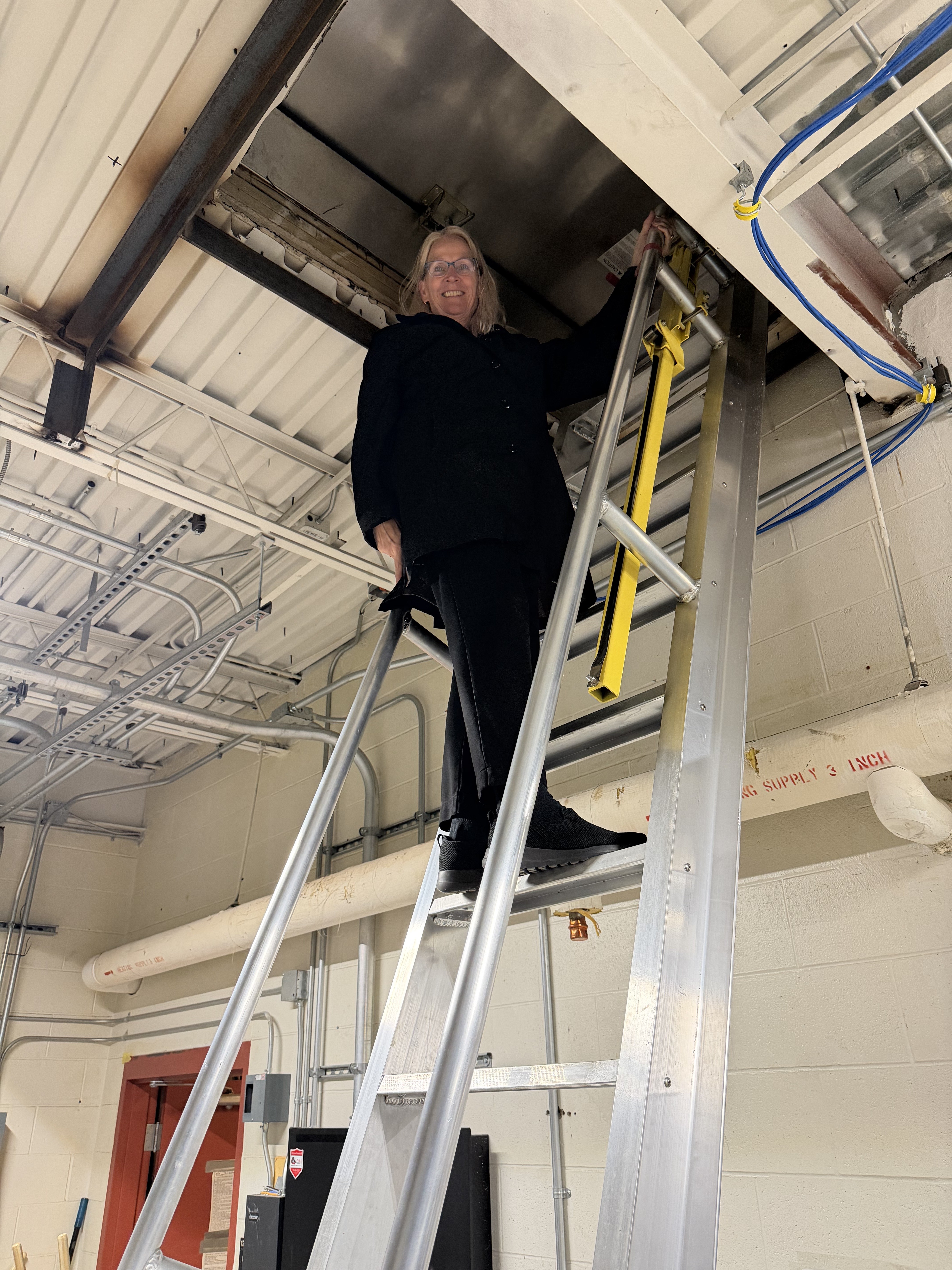 GRANT ADMINISTRATOR SANDRA BRUNDAGE ACCESSES A ROOFTOP HVAC UNIT AT PROSPECT ELEMENTARY SCHOOL.
LOCATED ON SENECA NATION TERRITORY AND SERVING BOTH NATIVE AND NON-NATIVE STUDENTS, SALAMANCA CITY
CENTRAL SCHOOL DISTRICT EXEMPLIFIES HOW ENVIRONMENTAL HEALTH AND CULTURAL VALUES CAN REINFORCE
ONE ANOTHER. THE DISTRICT'S WORK ALIGNS WITH THE TRADITIONAL STEWARDSHIP PRINCIPLE TO MAKE IMPROVEMENTS
THAT WILL BENEFIT THE NEXT SEVEN GENERATIONS OF INDIGENOUS STUDENTS.
PHOTO COURTESY OF SALAMANCA CITY CENTRAL SCHOOL DISTRICT
Aligning Improvements for Generations to Come
Salamanca City Central School District
Salamanca, New York
Salamanca City Central School District is a rural district in Western New York, located on the Allegany Territory of the Seneca Nation of Indians. Nearly half of all students, approximately 48%, identify as Native or Native/other/mixed race. The district serves a community in which roughly 26% of residents live in poverty, making the health, safety, and well‑being of students and staff a central priority.
With 400 staff members and 1,450 students across two campuses, the district is committed to becoming the premier educational system in Western New York. A key part of this vision is improving indoor air quality (IAQ), recognizing that children are especially vulnerable to environmental conditions that affect health, attendance, and academic performance.
To support long-term sustainability, the district is aligning IAQ improvements with energy‑efficiency initiatives, ensuring that school facilities remain healthy, resilient, and well‑maintained for generations. This work reflects the traditional stewardship principle of planning for the next seven generations, honoring the district’s responsibility to its Indigenous students and community.
“At Salamanca City Central School District, we are proud to receive the Silver Magna Award. The health, safety, and well‑being of our students, staff, and community are at the heart of every decision we make,” said Superintendent Mark Beehler. “The Magna Award is a testament to our hard work thus far and dedication to continue to strive for clean indoor air.”
As a district located on the Allegany Territory of the Seneca Nation, it carries a profound responsibility to honor the principles of stewardship and sustainability that have guided this community for generations, Beehler said.
Improving indoor air quality is a critical part of the district’s commitment. Clean, healthy learning environments directly influence attendance, academic success, and overall wellness, especially for children, who are more vulnerable to environmental conditions. By aligning its IAQ efforts with forward‑thinking energy‑efficiency initiatives, district leaders are ensuring that their facilities remain resilient, sustainable, and supportive of student learning far into the future.
“We are united in our vision of becoming the premier educational system in Western New York. This work is not just about infrastructure; it is about honoring our community, strengthening our schools, and creating a foundation where every student can thrive,” Beehler said. “Together, we are building a healthier, stronger, and more sustainable future for all.
CONTACT
Karen S. Magara
Assistant Superintendent for Finance and Operations
kmagara@salamancany.org
www.salamancany.orgT
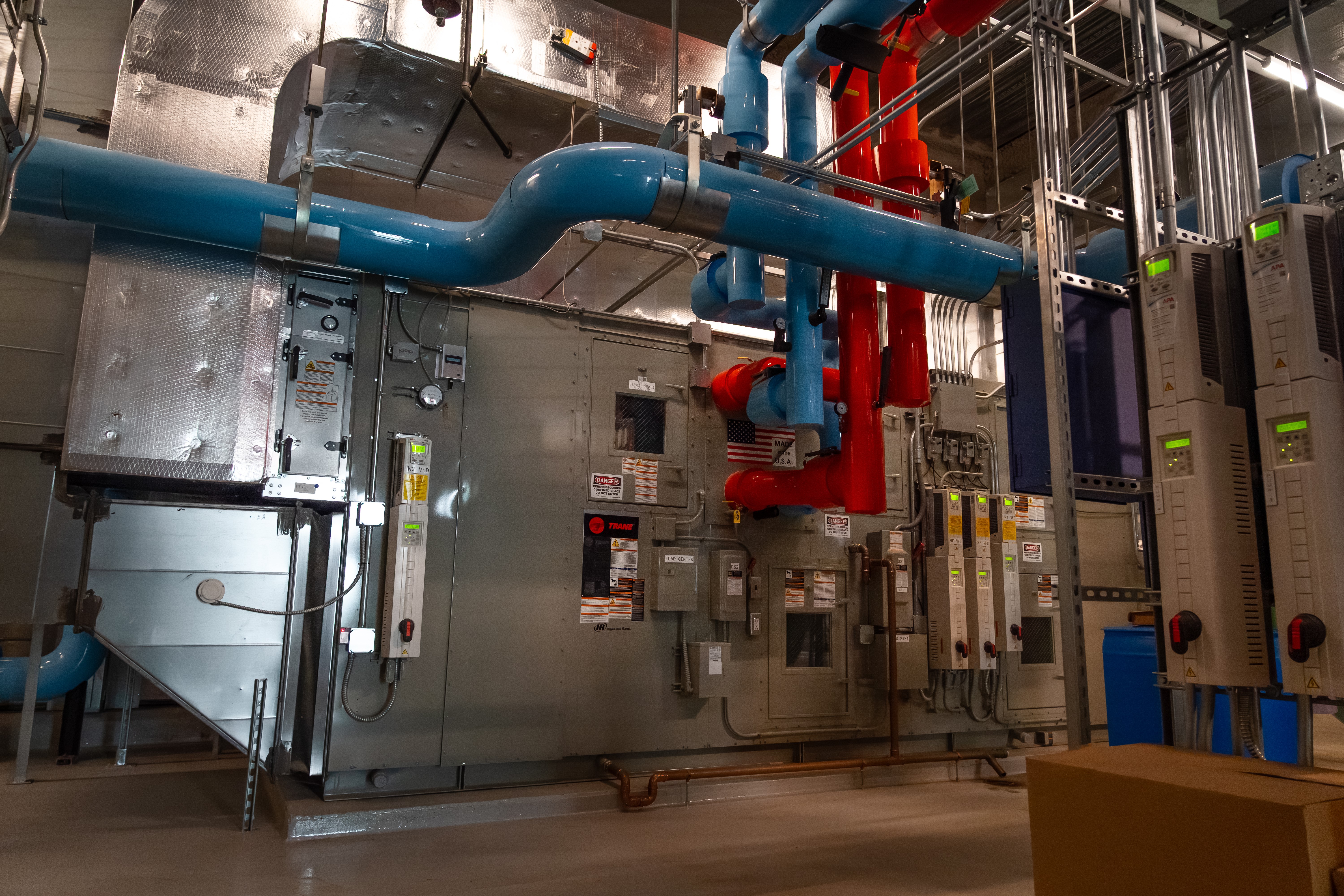 THE STATE-OF-THE-ART HEATING, VENTILATION, AND AIR CONDITIONING (HVAC) SYSTEM AT BOSTON PUBLIC SCHOOLS’ DEARBORN STEM ACADEMY
IS EQUIPPED WITH HIGH-EFFICIENCY CONDENSING BOILERS AND DEMAND CONTROLLED VENTILATION. THE HVAC SYSTEM INCORPORATES LEARNING
OPPORTUNITIES BY HAVING PARTS OF ITS INNER WORKINGS VISIBLE TO TEACHERS AND STUDENTS.
PHOTO COURTESY OF BOSTON PUBLIC SCHOOLS
Transparent and Accessible Air Quality Data
Boston Public Schools
Boston, Massachusetts
Boston Public Schools (BPS) is the largest school district in Massachusetts, serving approximately 46,000 students across more than 100 schools. The district reflects the city’s cultural and linguistic diversity. Over 85% of the district’s enrollment includes students of color, with the largest populations being Hispanic (44%) and Black (28%). Nearly 50% of students speak a language other than English at home, and more than 20% are classified as English learners. BPS students represent over 140 countries and speak more than 50 languages. About 58% of students are economically disadvantaged, and 1 in 5 receives special education services.
The Boston School Committee and district leadership played a central role in launching and sustaining the Indoor Air Quality (IAQ) program across BPS. In response to heightened concerns during the COVID-19 pandemic, leadership advocated for comprehensive monitoring, resulting in the installation of IAQ sensors in every classroom, nurse’s office, and main office, along with rooftop sensors for baseline outdoor measurements. The board supported the initiative by approving funding for the infrastructure and ensuring the data was made transparent and accessible to the public through a real-time online dashboard. This tool empowers staff and families to monitor air quality daily and has informed building-level responses, including HVAC adjustments and increased fresh air during events.
The board also backed efforts to align the program with state and federal air quality standards and supported partnerships—such as with Boston University—to evaluate its impact. Additionally, the board secured funding from state and federal sources, including a $15.4 million IVAQ grant and ESSER funds, to maintain and expand the system. The board’s ongoing commitment has ensured that the program is both technically sound and community-centered, transparent, and aligned with long-term health and safety goals.
“We are honored and grateful to receive this recognition from NSBA,” said BPS Environmental Technician Asher Clissold. “This achievement reaffirms our team’s commitment to improving indoor air quality for all BPS students and staff through strategies that prioritize equity, education, and public health.”
CONTACT
Boston Public Schools
Indoor Air Quality
indoorairquality@bostonpublicschools.org
www.bostonpublicschools.org/students-families/respiratory-illness-protocols/air-quality